Equity for all.
Ownership Works envisions a future where shared employee ownership is the norm — where employees at companies of all sizes can participate in the value they help create.
Realizing this future requires multiple pathways for establishing shared ownership. Today’s economy includes public companies, private and investor-backed businesses, family-owned firms, and small enterprises — each with different ownership structures, financing models, and goals.
Because of these differences, no single approach to employee ownership works everywhere.
Pathways to shared ownership.
There are many ways for companies to share ownership with employees, including equity compensation programs, retirement plans such as Employee Stock Ownership Plans (ESOPs), worker cooperatives, employee ownership trusts (EOTs), and employee stock purchase plans (ESPPs).
Companies choose the model that best suits their ownership structure, size, growth strategy, and long-term goals.
While each model takes a different approach, they share a common goal: helping employees build savings and wealth while driving business success.
The Ownership Works Model: Broad-Based Equity Compensation Many companies grant equity to senior executives, typically through instruments such as stock options, restricted stock, restricted stock units (RSUs), and stock appreciation rights (SARs). The Ownership Works model builds on these familiar tools by extending equity participation to all employees — including frontline workers who have historically had limited access to ownership.
Key features
- Broad-Based: All employees are eligible, subject to standard requirements such as tenure and/or full-time status.*
- No Cost: Participation is provided to employees at no cost and does not replace wages or benefits.
- Instrument: Equity is granted through a company-wide pool or individual awards, using real equity (such as RSUs) or equity-linked instruments (such as SARs), which can reduce administrative complexity and simplify tax treatment.
- Governance: These programs focus on broad-based financial participation. As with most forms of equity ownership in modern corporations, employees do not have direct governance control. Many companies pair ownership programs with efforts to build an ownership culture that strengthens transparency, communication, and employee engagement.
- Financial Benefit (Near-Term Liquidity): Employees receive payouts within approximately five years, providing a clear and relatively near-term path to realizing value, often tied to company performance and liquidity events, like the sale of the company. The Ownership Works movement aims to inspire subsequent buyers to also share ownership, which would create multiple ownership and wealth-building opportunities for employees who have received payouts. We have seen a few early examples of this happening.
- Partially Employee-Owned: Employees typically receive a minority stake, which can generate meaningful financial outcomes for individual employees when shared broadly across the workforce.
*In some cases, programs are tailored to local contexts or business needs. Some highly labor-intensive companies are piloting programs focused on frontline managers and long-tenured frontline employees.
What this model emphasizes: Near-term financial upside tied to company performance.
Good fit: Private or public companies, including investor-backed and multinational firms, seeking to extend ownership broadly across their workforce.
Ownership Works currently works most often with private-equity-backed companies for three strategic reasons:
- Scalability. Partnering with private equity provides an efficient way to reach many companies, enabling shared ownership to extend to hundreds of thousands of employees.
- Expanding Participation. The transition to private equity ownership typically expands equity participation beyond founders to leadership teams. This creates a natural opportunity to extend ownership more broadly across the workforce, building on existing equity structures.
- Clear Path to Payouts. Defined investment timelines create a clear path to payouts within roughly five years, helping workers address near-term financial needs as well as invest in longer-term savings and wealth-building.
Ownership Works helps companies implement our model and does not structure Employee Stock Ownership Plans (ESOPs), worker cooperatives, Employee Ownership Trusts (EOTs), or Employee Stock Purchase Plans (ESPPs). But we refer companies to advisors who do.
To learn more about the Ownership Works model, visit our How We Help page.
Employee Stock Ownership Plans (ESOPs)
ESOPs are qualified retirement plans under U.S. law that allow employees to build ownership over time through a trust structure. New ESOPs are primarily formed by founders when they are ready to sell their company (at retirement or earlier), providing a tax-advantaged way to transfer ownership to employees over time — often using borrowed funds that are repaid by the business, out of future tax-deductible profits, not by the employees. Existing ESOPs are also growing as they acquire non-ESOP companies.
ESOPs are qualified retirement plans under U.S. law that allow employees to build ownership over time through a trust structure. New ESOPs are primarily formed by founders when they are ready to sell their company (at retirement or earlier), providing a tax-advantaged way to transfer ownership to employees over time — often using borrowed funds that are repaid by the business, out of future tax-deductible profits, not by the employees. Existing ESOPs are also growing as they acquire non-ESOP companies.
Key features
- Broad-Based: All employees participate through a retirement plan, subject to eligibility requirements related to the number of hours worked per year.
- No Cost: Participation is provided at no cost to employees.
- Instrument: Company shares are held in a retirement trust and allocated to individual employee accounts over time.
- Governance: Under these plans, governance is exercised through a trustee, who holds the voting rights and elects the board of directors on behalf of employees. Employees may have limited pass-through voting rights in certain major transactions, such as an asset (but not stock) sale, though the trustee retains fiduciary responsibility for these decisions. Some ESOPs adopt democratic governance.
- Financial Benefit (Long-Term Wealth Building): Employees accumulate value in a retirement account over time, tied to company performance. Benefits are typically realized upon retirement or departure, often with delayed payouts. When an ESOP-owned company is sold, the ESOP typically sells its shares and converts them into cash, which is then allocated to employees’ accounts and paid out to them when escrow is settled.
- Partially to Fully Employee-Owned: ESOPs can represent minority or full ownership, depending on how many shares are held in the trust. A significant majority of ESOP wealth is concentrated in publicly traded companies, where employees typically hold minority stakes, but 95% of ESOPs are in closely held companies.
What this model emphasizes: Long-term retirement wealth.
Good fit: Founder- or family-owned domestic companies seeking ownership succession solutions and long-term employee wealth creation.
Worker Cooperatives
Worker cooperatives are businesses owned and governed by their employees, who participate directly in both financial outcomes and key decisions.
Worker cooperatives are businesses owned and governed by their employees, who participate directly in both financial outcomes and key decisions.
Key features
- Broad-Based: Employees are eligible to become member-owners, typically after meeting tenure requirements.
- Modest Cost: Employees usually make a modest buy-in to become members.
- Instrument: Ownership is represented through internal capital accounts tied to membership, rather than tradable shares.
- Governance: Employees participate directly in governance, typically on a one-member, one-vote basis, including electing the board of directors.
- Financial Benefit (Profit Sharing and Departure Payout): Employees receive profit-sharing based on labor contribution and company performance, with a portion of those profits often retained in capital accounts and paid out upon departure.
- Fully Employee-Owned: Employees collectively own 100% of the business.
What this model emphasizes: Shared control and ongoing profit-sharing.
Good fit: Smaller businesses prioritizing shared decision-making and equitable income distribution.
Employee Ownership Trusts (EOTs)
EOTs hold company shares on behalf of employees collectively, enabling broad participation without requiring individual share ownership. Employees do not have a claim on the equity value of the company.
EOTs hold company shares on behalf of employees collectively, enabling broad participation without requiring individual share ownership. Employees do not have a claim on the equity value of the company.
Key features
- Broad-Based: All employees benefit from the trust structure.
- No Cost: Employees do not purchase shares or contribute capital.
- Instrument: A trust holds company shares on behalf of employees collectively.
- Governance: Under EOTs, governance is exercised through the trust, which may include employee representation depending on the structure. Companies may also support employee voice through additional engagement practices.
- Financial Benefit (Profit Sharing): Employees benefit primarily through profit-sharing distributions tied to company performance.
- Partially to Fully Employee-Owned: The trust can hold a minority or majority stake, with the stake often increasing over time.
What this model emphasizes: Long-term stewardship and shared financial benefits.
Good fit: Founder-owned companies seeking independence, continuity, and broad employee participation.
Employee Stock Purchase Plans (ESPPs)
ESPPs allow workers to purchase company stock, often at a discount, through payroll deductions.
ESPPs allow workers to purchase company stock, often at a discount, through payroll deductions.
Key features
- Broad-Based: Typically available to most employees in public companies, subject to eligibility requirements.
- Discounted Cost: Employees purchase shares using payroll deductions, often at a discount from the market cost.
- Instrument: Employees purchase company stock directly, typically at a discounted price relative to market value.
- Governance: Employees who purchase shares may have voting rights associated with those shares. In practice, these rights are typically limited due to small individual ownership stakes and are not a central feature of the plan.
- Financial Benefit (Market Exposure): Employees benefit from stock price appreciation and purchase discounts, with liquidity available in public markets.
- Partially Employee-Owned: Employees collectively hold a small minority of shares.
What this model emphasizes: Voluntary equity participation and market exposure.
Good fit: Public companies offering employees a way to build ownership over time.
To learn more about the different models of employee ownership, visit the National Center for Employee Ownership’s Forms of Employee Ownership page.
To learn more about the advisors and practitioners of these different models, visit NCEO’s Who’s Who in ESOPs and Employee Ownership page.
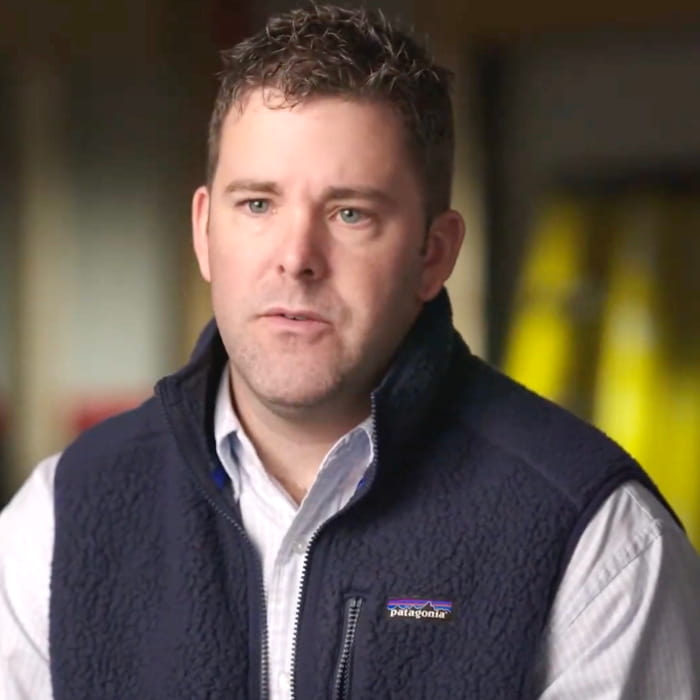
"It’s always been a desire of ours to fund college for all three kids. So now, there’s just a certain level of pressure that’s off your shoulders... At the end of the day, there’s a great opportunity for your family. It could potentially change generations.”
— Andy P. on how becoming an employee-owner at C.H.I. Overhead Doors has positively impacted his family.
Different models, shared purpose.
Employee ownership takes many forms across industries, company sizes, and ownership goals, but all share a common purpose: giving more workers the opportunity to share in the wealth they help create.
As more companies adopt shared ownership, the movement grows — reaching more workers, families, and communities.
We celebrate all approaches that expand ownership and create greater economic opportunity for all.