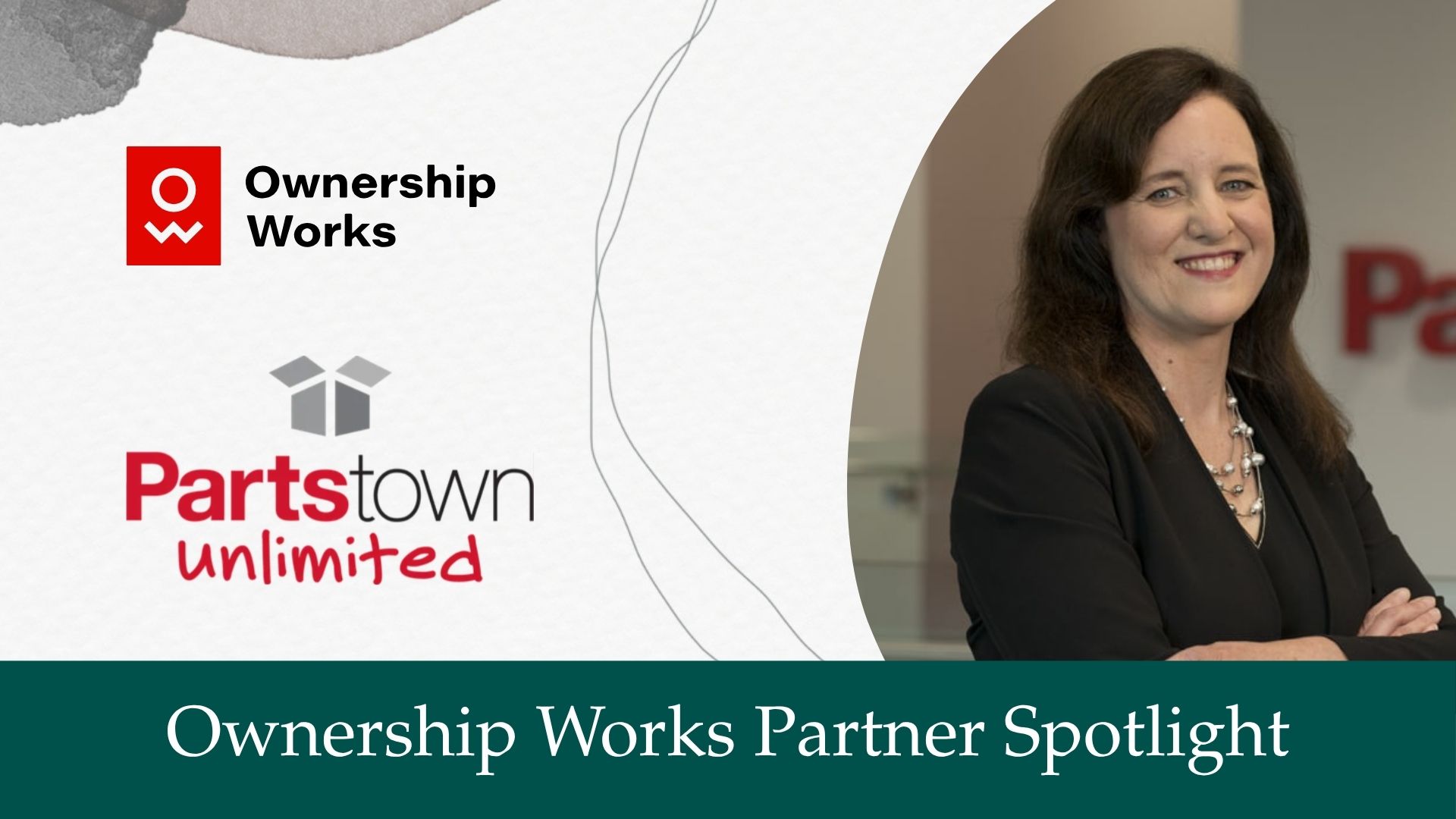
“Our Executive Chairman often says, ‘When you’re struggling with a decision, look to our values, and they’ll show you the way,’” said Lori Sherwood, Chief Financial Officer at Parts Town Unlimited. “Another gem is, ‘When in doubt, err on the side of generosity.’ Both of those mantras resonate deeply with me and guide my leadership, especially when facing big decisions.”
Last year, Sherwood and the rest of the executive team at Parts Town had the opportunity to bring those mantras to life when they launched “Town Shares,” the company’s new broad-based employee ownership program.
Town Shares extends the rewards of ownership beyond senior leadership. The program was developed with the support of Ownership Works and in partnership with Parts Town’s investors: Berkshire Partners, Leonard Green & Partners (LGP) (both O.W. Founding Partners), and Roark Capital. And, so far, the program is having a strong positive impact. “Doing the right thing often pays you back in spades,” Sherwood explained.
Ahead of her upcoming retirement, Ownership Works spoke with Sherwood about her tenure at Parts Town and why supporting the company’s decision to expand ownership beyond the C-suite has been one of the most meaningful decisions of her career.
Q. As CFO, how did you make the business case for employee ownership to other leaders and key stakeholders at Parts Town?
Sherwood: The minute we heard about this program, we were all in. We’re so anchored in our values of safety, integrity, community, passion, courage, and innovation. What better way to support our community — our entire global team — than by launching a program that can bring real financial security to them?
The belief is that more engaged team members, all driving toward the same North Star, will deliver better performance for the company, creating a better outcome for our investors and our team. It’s the ultimate win-win.
The financial modeling was key to discussions with the board — to set the size of the initial and subsequent grants, understand attrition, and understand the impact of the program. With the help of Ownership Works and insights from others who are farther along in this journey, we built a program that felt right for us.
“What better way to support our community — our entire global team — than by launching a program that can bring real financial security to them?”
Q. How does employee ownership help employees achieve financial wellbeing and resilience?
Sherwood: Study after study has shown that employees bring stress from their personal financial situations to work, and we wanted to find ways to better support our team across their full financial picture. We already had resources in place in some locations. In the U.S., for example, we offer a 401(k) plan with free financial planning assistance, as well as an employee emergency fund through E4E Relief. But we want to do more to help with everyday financial decisions — how to manage credit, pay down debt, or save for a home purchase.
I think introducing this employee ownership program is just one step in the financial journey of our employees. We all hope for a spectacular exit where we’re handing out a lot of money, and our team members may need guidance on what to do with those payouts. In the meantime, we wanted to make sure they have strong financial wellness resources in place.
We’re continuing to build out additional financial wellness resources so we can support our team in the most effective way, without being intrusive. It’s a balance.
Q. How did employee ownership influence the way that you have shown up for your team? Has it changed how you’ve communicated, made decisions, or supported people day-to-day?
Sherwood: Now that we’ve rolled out the employee ownership program, we talk much more about acting like owners. In our owner updates, we’re always linking the connection between the decisions team members are making and the actions we’re taking as a company. Growing the company, making it more efficient or profitable, leads to a better exit, which is better for everyone.
Q. How are Parts Town‘s employees showing up differently at work now that they’re owners? And how is your team supporting that culture of ownership?
Sherwood: Making our team members owners has really enhanced their voice. We recently launched an innovation platform called Unlimited Impact, where people can submit ideas for changes — big or small — and we’ve already implemented a number of them.
I think it’s made people more collaborative and more willing to share suggestions they might otherwise keep to themselves. I have two examples to highlight. First, we recently launched an “AI Ambassadors” program where we asked team members throughout the organization to volunteer to learn more about AI and drive the conversation and utilization of AI broadly across the organization.
Over 200 people are now working to share ideas and drive improvements for our customers, manufacturer partners, and team member productivity. Second, we’re now getting more questions from our team about our performance – instead of our leaders trying to inspire them around our financials, they are owning the results and asking more questions – both to learn more and to educate themselves, which they may not have pursued in the past.
What I’d like to see is team members continuing to think like owners, grow and improve the business, and take the company to ever greater heights — because in that scenario, we all come out winners. Looking ahead, this will carry on long after I’ve retired, and that’s really exciting to me.
“The day you get to tell your team members you’ve sold the company and show them what their shares are worth — that’s the best day of your career.”
Q. What advice would you give to other CFOs or senior leaders who are curious about employee ownership?
Sherwood: I would say, take the leap! Giving team members the opportunity to leverage their work into something bigger brings both tangible and intangible returns. Our investors support programs like this because they believe they drive better retention, engagement, and financial results. That’s good for everyone.
Having been through this a couple of times now, through multiple turns with private equity sponsors, I can tell you it brings the best day of your career. The day you get to tell your team members you’ve sold the company and show them what their shares are worth — that’s the best day of your career.
This interview has been lightly edited and condensed.